
Talking about silica bricks advantages, the main point is they stand up to very high heat without changing volume much after the initial heating.
When you check the silica brick composition, it is mostly SiO₂, usually over 94% or 96%. We crush raw silica stone, mix it with a little lime milk, and fire it slow. This makes it a great acid silica refractory brick for glass tanks and non-ferrous smelting kilns.
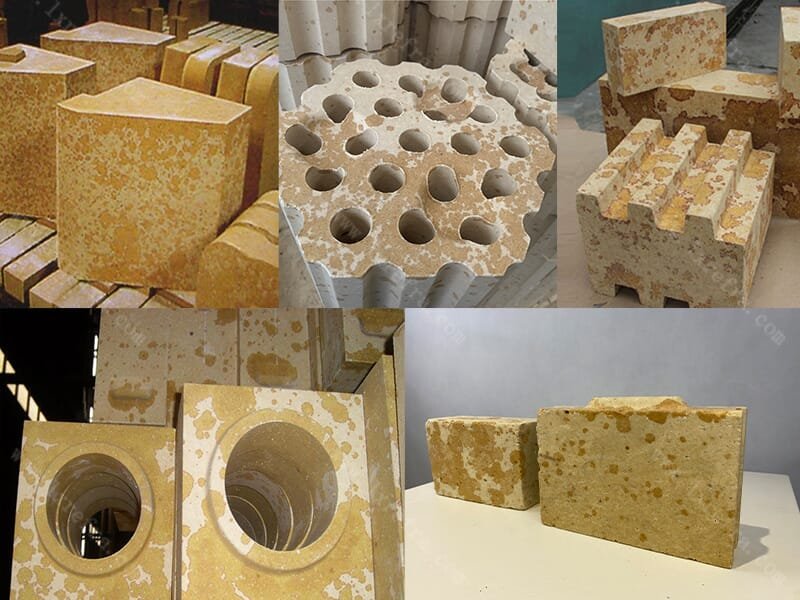
1.Core silica brick properties
If you look at our silica brick datasheet, you see the real numbers we test in the lab.
The silica brick density is usually around 2.33 to 2.35 g/cm3. This true density is very important for holding the kiln structure tight.
Another big thing is the silica brick thermal conductivity. It conducts heat very well above 600°C, which helps your furnace save heating energy.
Because of these solid silica brick properties, the brick does not soften or fail easily under high load stress (Refractoriness under load is around 1620-1670°C).
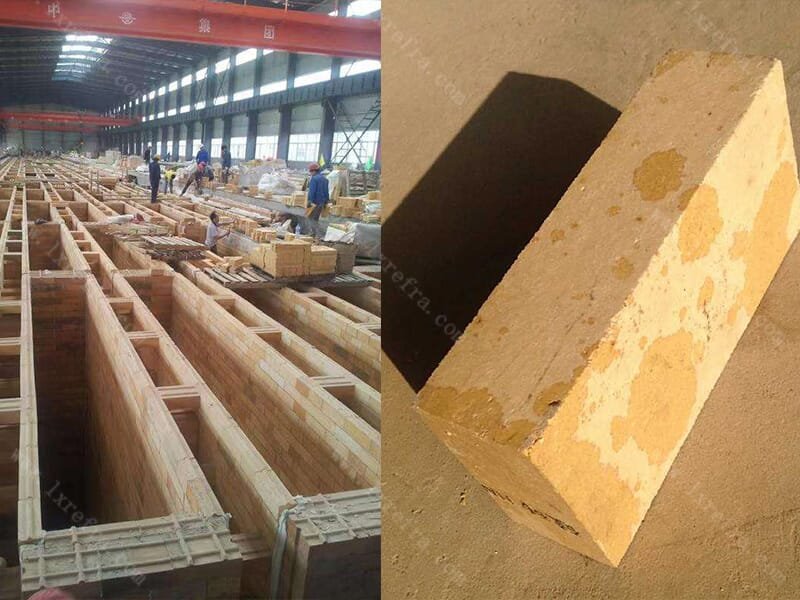
We control the silica brick specifications strictly. When you heat up a new kiln, the brick expands. You must leave expansion joints. But after 600°C, the volume becomes very stable, keeping your kiln safe for a long time.
2.Main silica brick uses in kilns
For silica brick application, it performs best in hot blast stoves, coke ovens, and glass melting furnace roofs.
In non-ferrous metallurgy kilns, acid slag eats normal bricks fast. But a high-quality silica fire brick resists acid slag very well.
We supply many silica brick dimensions. The standard straight size is 230x114x65mm. But in our workshop, we press a lot of custom wedge shapes for arch roofs and side walls.
The specific silica brick uses dictate the exact mold we use on our heavy press machines.
If you are building a new smelter or doing routine kiln maintenance, contact us for the full refractory fire brick catalogue.