
Many of our lead smelting customers struggle to choose between high-alumina fire bricks and magnesia-chrome bricks when selecting refractory bricks. We generally recommend magnesia-chrome bricks, and I will explain the reasons for this recommendation below.
Lead smelting converters are the core equipment in lead smelting.
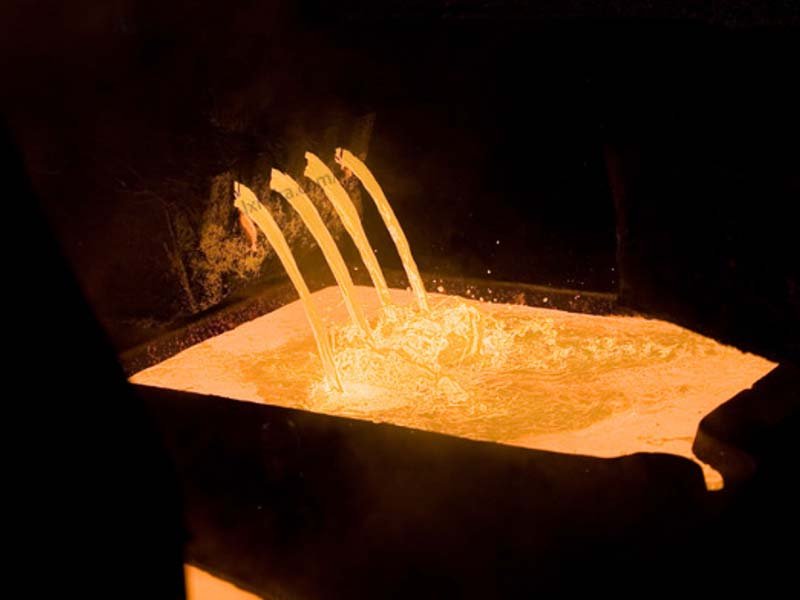
The working environment inside the furnace is extremely harsh, with molten pool temperatures reaching 1200-1400℃. The alkaline slag inside the furnace is highly corrosive, and the refractory bricks lining the furnace face challenges. Such as high-speed erosion by the molten material and frequent temperature fluctuations. Therefore, the choice of refractory material for the furnace lining directly affects production stability.
Magnesia-chrome bricks, with their excellent comprehensive performance, have become the preferred refractory material for lead smelting converters.
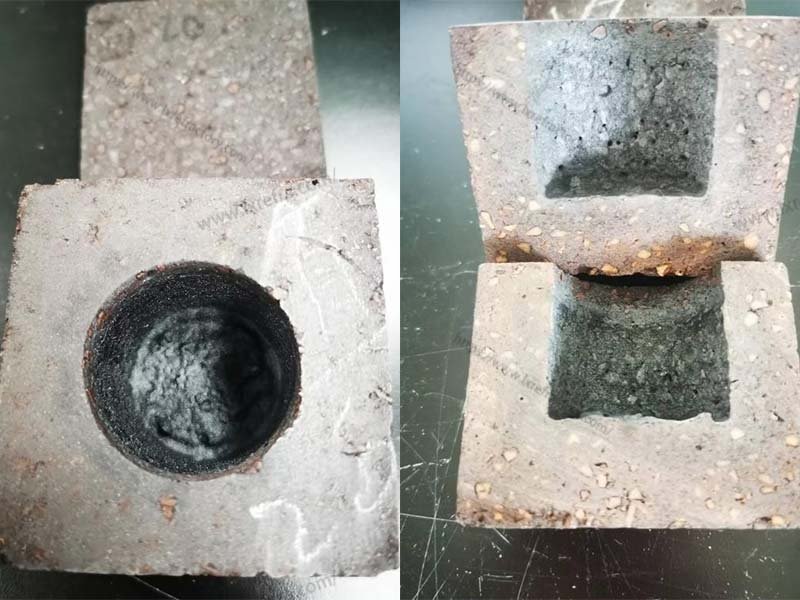
Magnesia-chrome bricks are mainly composed of periclase and magnesia-chrome spinel. Their most prominent advantage is their strong resistance to alkaline slag erosion. They can effectively resist the chemical erosion of components such as PbO and ZnO in lead slag, and are not prone to melting and damage, far exceeding other materials such as high-alumina bricks.
Henan Ruitai Lianxin Refractory Materials Co., Ltd. conducted slag erosion resistance experiments on magnesia-chrome bricks. The experimental results are shown in the figure above.
Furthermore, magnesia-chrome bricks exhibit excellent thermal shock resistance, adapting to frequent temperature fluctuations caused by converter start-up, shutdown, and charging operations, reducing the risk of cracking and spalling.
Their dense structure and low apparent porosity effectively block the penetration of high-density molten lead. They also maintain stable performance in alternating redox atmospheres, demonstrating outstanding resistance to sulfidation and flue gas corrosion.
In summary, magnesia-chrome bricks are perfectly suited to the harsh operating conditions of lead smelting converters, extending furnace lining life, reducing maintenance frequency, and ensuring continuous and stable lead smelting production.