
Silicon carbide bricks are high-performance refractory materials using silicon carbide as aggregate and matrix. Their performance advantages are concentrated in three aspects: thermal, mechanical, and chemical stability.
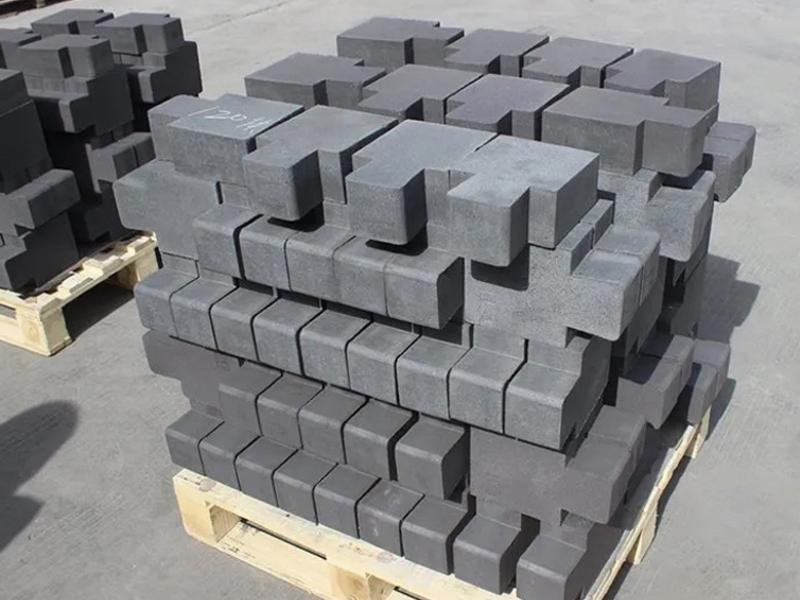
In terms of thermal properties, the most prominent advantage of silicon carbide bricks lies in their extremely high thermal conductivity and excellent thermal shock resistance. Due to the excellent thermal conductivity of silicon carbide crystals themselves, the bricks can rapidly transfer heat from high-temperature surfaces to low-temperature surfaces, helping to achieve temperature homogenization within the kiln and significantly improving heat exchange efficiency. Simultaneously, their extremely low coefficient of thermal expansion means that during repeated heating and cooling operations, the thermal stress generated within the brick is relatively small, making it less prone to spalling or cracking due to drastic temperature fluctuations, thus ensuring the long-term integrity of the furnace structure.
In terms of mechanical properties, silicon carbide bricks exhibit excellent high-temperature strength and outstanding wear resistance. Even in environments approaching their extreme service temperatures, the bricks maintain high structural stiffness and are not prone to softening or deformation, allowing them to withstand continuous physical impacts and friction from furnace charge or high-temperature airflow. Its high hardness makes it effective at resisting abrasion from solid particles when used as a lining for furnace bottoms or material conveying channels, thus significantly extending the service life of equipment.
In terms of chemical stability, silicon carbide bricks exhibit extremely strong resistance to erosion. They demonstrate good resistance to various acidic slags and low-alkaline environments, and are not prone to reacting with the furnace atmosphere or molten metal in contact. This characteristic makes them particularly suitable for smelting environments with flux erosion or highly corrosive gases. However, it should be noted that under specific strong oxidizing atmospheres or high-alkaline slag systems, its surface protective layer may be affected; therefore, specific material selection still needs to be considered in conjunction with the operating conditions.
In summary, silicon carbide bricks, with their good thermal conductivity, thermal shock resistance, high strength, and wear resistance, have become an indispensable key material in modern high-temperature industries, widely used in core components such as blast furnace belly, aluminum electrolysis cell sidewalls, and high-temperature kiln furniture in the ceramics industry. Their application not only improves production stability but also provides strong material support for energy conservation and emission reduction.