
High-temperature furnaces in the glass industry are collectively called glass melting furnaces. Their core function is to melt the batch materials into molten glass that meets the forming requirements at high temperatures. Based on structure and operation, they are mainly divided into two categories: tank furnaces and crucible furnaces. Tank furnaces are the mainstay of modern continuous production.
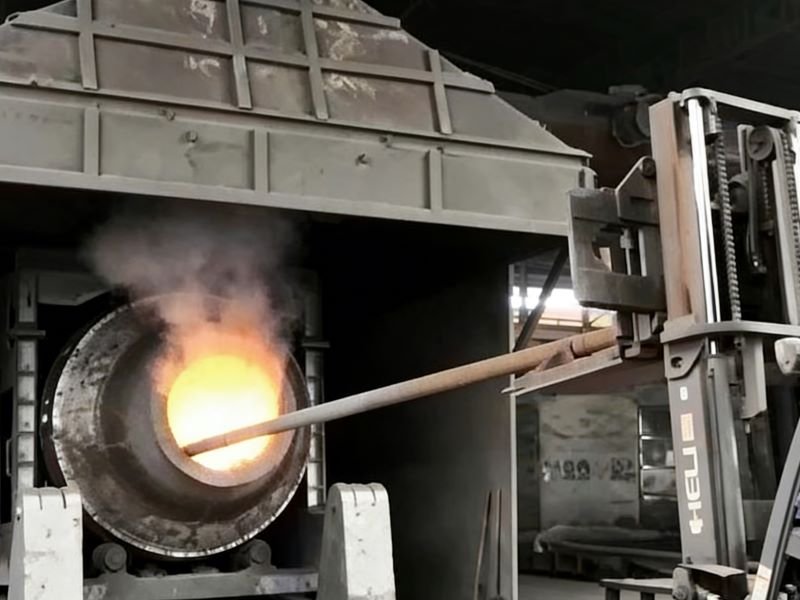
Tank Furnaces
Tank furnaces: These have a refractory-lined melting pool where the batch materials are directly added for melting. They are suitable for large-scale continuous production and have high thermal efficiency.
Tank furnaces are the main equipment in the modern glass industry (such as flat glass and bottle glass). Based on the flame organization, there are three main types:
Horizontal flame melting furnace: The flame flows along the width of the melting pool, perpendicular to the flow direction of the molten glass. This type of furnace facilitates temperature control and is commonly used in large flat glass production lines in my country.
Horseshoe flame melting furnace: The flame flows along the longitudinal axis of the furnace and rotates in a horseshoe shape. The regenerator structure is compact. It is mainly used in small and medium-sized furnaces, especially in the production of everyday glass and bottle glass.
Oxygen-assisted combustion melting furnace: This type uses pure oxygen instead of air for combustion. This technology significantly improves combustion efficiency, reduces nitrogen oxide emissions, and simplifies the regenerator structure.
Crucible Furnace
A crucible furnace involves placing one or more crucibles within the furnace chamber for melting. It is an intermittent operation, highly flexible but with low output, and is often used for specialty glasses or tableware glass with a wide variety of products and small production volumes.
Furthermore, based on the heat source, furnaces can be divided into flame furnaces (fuel-heated) and electric melting furnaces. Electric melting furnaces utilize the resistance of the molten glass itself for heating, resulting in extremely high thermal efficiency and easily controllable temperature. They are commonly used for melting refractory glass or glass with volatile components.