
The reverberatory furnace is the core equipment in tin smelting. It relies on flame radiation to heat the furnace charge, efficiently completing processes such as tin ore reduction, impurity removal, and slag separation.
Tin Reverberatory Furnace Refining Process
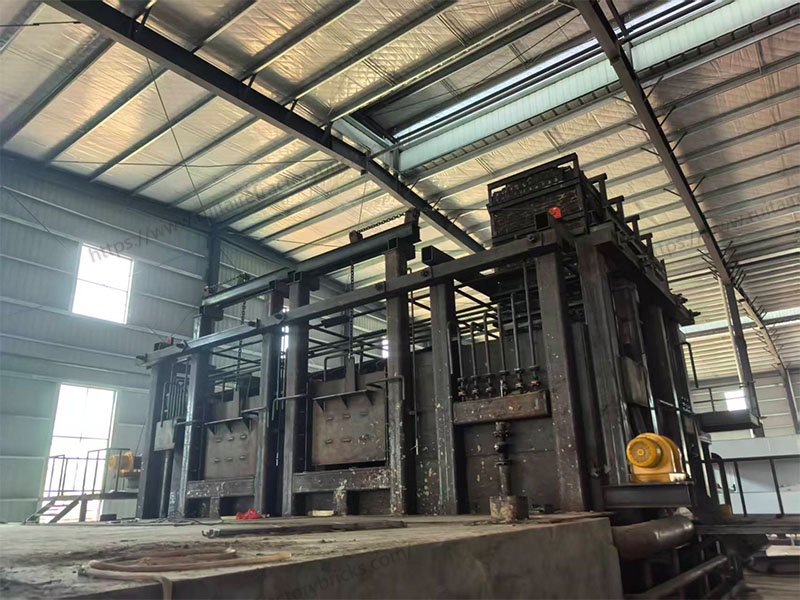
Tin Pretreatment:
Using ore as raw material, harmful impurities are removed through roasting, improving the purity of the ore.
Charging:
The pretreated tin concentrate, pulverized coal reducing agent, and an appropriate amount of flux are uniformly mixed and fed into the reverberatory furnace. As the fuel burns, the furnace temperature gradually rises. The furnace temperature is then maintained stably at 1300-1400 degrees Celsius.
Reduction Reaction:
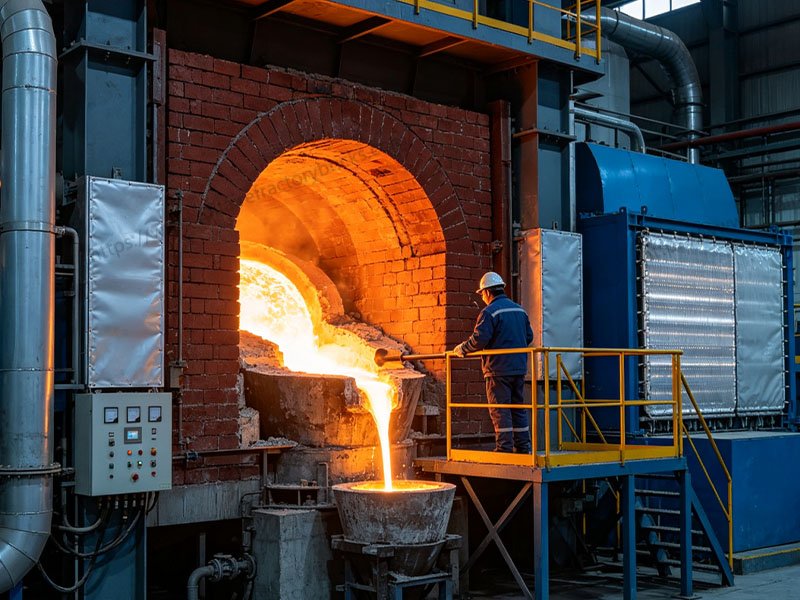
At high temperatures, carbon monoxide produced by the pulverized coal plays a reducing role, reducing tin oxide to molten metallic tin. During the smelting process, operators stir the furnace charge periodically to ensure a more complete reduction reaction.
Obtaining Crude Tin: After approximately 10 hours of constant-temperature smelting, stratification is completed, with slag on top of the molten tin. The bottom layer of pure crude tin is discharged first, followed by the upper layer of waste slag. Waste residue can be sent to specialized equipment for further recycling of tin metal.
Compared to other smelting equipment, reverberatory furnaces for tin refining have wide applicability. The crude tin produced can be further refined and purified to obtain high-purity industrial tin.