
The preparation of lightweight silica fire bricks requires meticulous operation and strict raw material control. First, the selected ordinary silica must be finely ground to ensure a particle size of less than 1mm, guaranteeing the uniformity and density of the finished product. Next, a specific proportion of anthracite or coke is added. The particle size of these additives also needs precise control to form an ideal porous structure during firing, thereby reducing the material’s density.
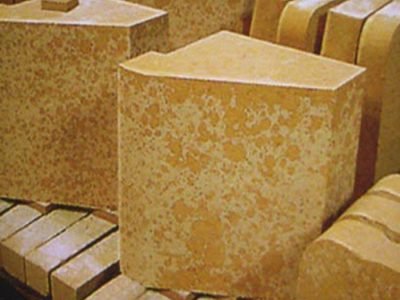
In addition, small amounts of lime, gypsum, and waste pulp are added to the raw materials. These components play a crucial auxiliary role in the forming and firing process. After precise batching, mixing, forming, and drying, the lightweight silica fire bricks are fired at a high temperature of 1270–1300℃. This step requires extremely high temperature control in the kiln to ensure the stable performance of the finished product.
Lightweight silica fire bricks also possess outstanding characteristics. Their bulk density is controlled between 0.9 and 1.1 g/cm³, a lightweight property that effectively reduces structural load in applications. Simultaneously, their thermal conductivity is only half that of ordinary silica bricks, exhibiting excellent thermal insulation performance. Lightweight silica bricks also exhibit excellent thermal shock resistance, remaining stable even in environments with rapid temperature changes.
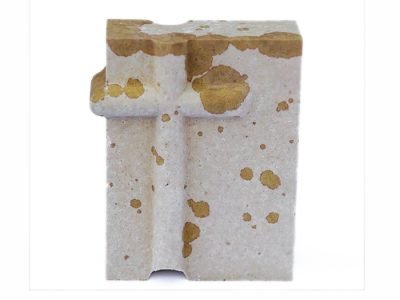
Notably, lightweight silica bricks have a load-bearing softening onset temperature as high as 1600℃, far exceeding other lightweight refractory materials. Such as lightweight clay bricks. Their maximum service temperature can reach 1550℃, and they do not shrink under high-temperature conditions; instead, they exhibit slight expansion. This characteristic makes them promising for a wide range of applications in high-temperature industrial fields.