
To obtain anode copper, the reverberatory furnace removes impurities and desulfurizes the crude copper.
The reverberatory furnace is a horizontal rectangular structure with four openings depending on the process: a charging port, an oxidation duct, a slag discharge port, and a copper outlet.
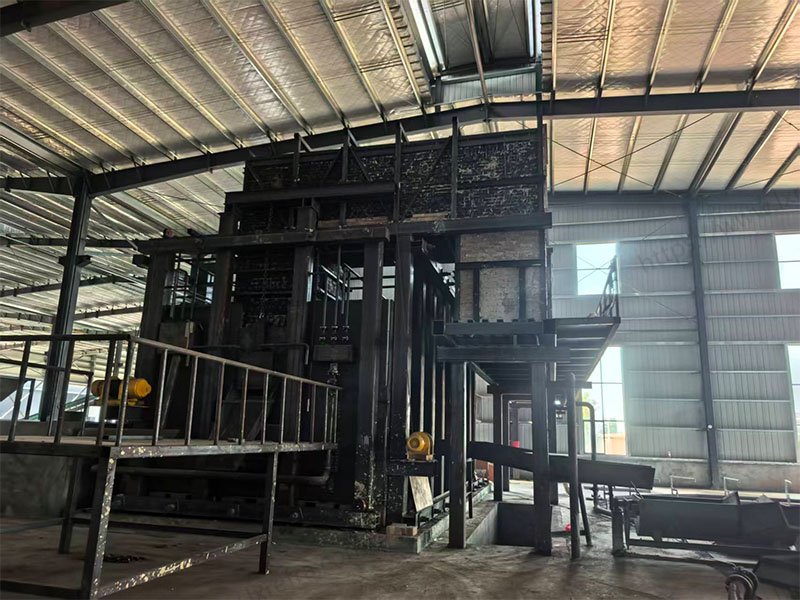
Charging Port:
Liquid crude copper, solid cold crude copper, electrolytic residue, scrap copper, copper blocks, and returned slag enter the furnace through the charging port for oxidation. During the melting stage, the material layer and molten pool height can be observed through the charging port.
Oxidation Duct:
The oxidation duct equipped with a water-cooled jacket. Blow compressed air into the molten copper. In order to providing oxygen for the oxidation reaction and achieving impurity removal.
The water-cooled jacket is responsible for removing heat and protecting the steel structure. Forced cooling prevents the duct from melting.
Slag Discharge Port:
The slag discharge port is located above the copper molten surface, corresponding to the height of the oxide slag layer. During oxidation, impurities continuously form slag, which floats on the surface of the molten copper. The slag outlet is opened periodically to discharge the slag. It controlled the thickness of the slag layer in the molten pool. In order to preventing excessive slag from blocking radiant heat and prolonging the smelting cycle.

Copper Tap:
After reduction and deoxidation are complete, the opening is opened to release qualified liquid anode copper. The molten copper flows out under its own weight. It is fed into a chute, and transported to the anode casting machine. Then obtain the anode plate.