
Silica-mullite bricks are mainly classified according to three dimensions: performance grade, product characteristics, and application scenarios. The specific classification is explained below.
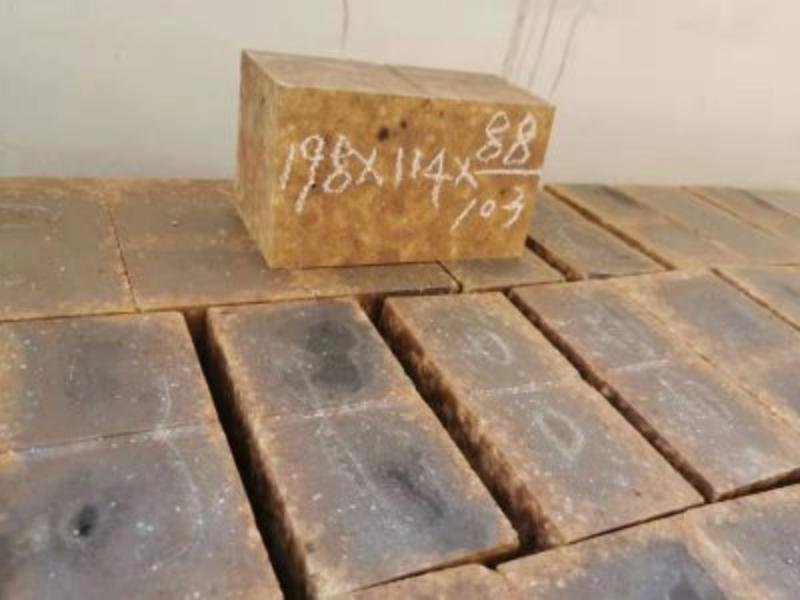
1. Classification by Performance Grade
This is the most mainstream and standardized classification method in the industry. Based on the key high-temperature mechanical index of load softening temperature, silica-mullite bricks are divided into different grades to suit different kiln locations with varying temperature conditions.
GM-1680 Grade: Load softening temperature ≥1680℃, with optimal overall performance. Al₂O₃ content is typically ≥65%, bulk density ≥2.65 g/cm³, and compressive strength ≥90 MPa. Suitable for areas with the highest temperatures and most intense erosion, such as the secondary firing zone (transition zone) of large cement rotary kilns.
GM-1650 Grade: Load softening temperature ≥1650℃, the mainstream product in the market. Al₂O₃ content ≥63%, bulk density ≥2.60 g/cm³. Widely used in the transition zones before and after cement rotary kilns.
GM-1550 grade: Load softening temperature ≥1550℃, good economic efficiency. Al₂O₃ content ≥60%, bulk density ≥2.55 g/cm³, thermal shock stability (12 cycles) is superior to the former two. Mostly used in relatively low-temperature decomposition zones, preheaters, and tertiary air ducts.
2. Classification by product characteristics and structure
Silica-mullite red brick: Modified by introducing andalusite and other raw materials, it possesses superior thermal shock stability (thermal shock resistance up to 25 cycles or more, far exceeding the 10 cycles of ordinary silica-mullite bricks), hence its reddish color. It has stronger resistance to spalling under conditions of drastic temperature differences.
Silica-mullite composite brick: A product with a functional gradient structure. The working layer uses the high wear-resistant formula of silica-mullite bricks, while the insulation layer uses a low thermal conductivity aluminosilicate material. The two layers are tightly bonded through a special process. This design, while ensuring high temperature resistance and erosion resistance, significantly reduces the thermal conductivity, effectively lowering the temperature of the rotary kiln outer wall and achieving energy conservation and consumption reduction.
3. Classification by Application Scenarios
Silica-mullite bricks are “customized” products specifically designed for the service environment of cement rotary kilns, but their sub-categories have expanded to other fields.
Cement Kiln Dedicated Series: Covers key components of rotary kilns such as the transition zone, decomposition zone, cooler, and tertiary air ducts.
Metallurgical/Chemical Series: Developed for industrial kilns with special requirements for wear resistance and corrosion resistance, such as those used in molten iron pretreatment, hot blast stoves, or hazardous waste incinerators.
In summary, in practical engineering, the most common classification method is selection based on grade (GM-1680/1650/1550). If there are special requirements for thermal shock resistance or energy conservation, silica-mullite red bricks or silica-mullite composite bricks will be preferred.