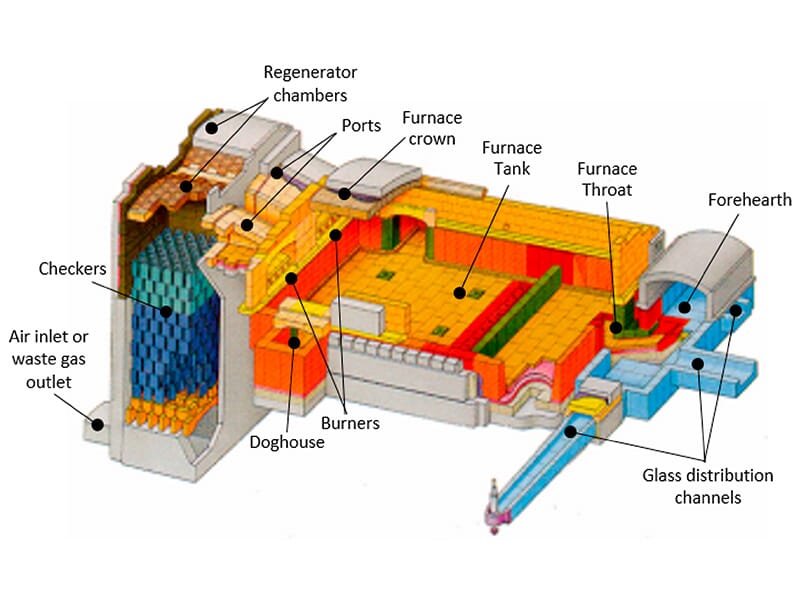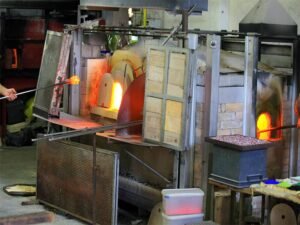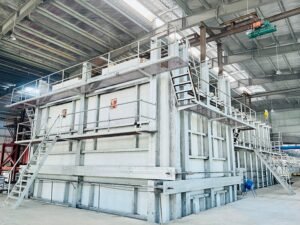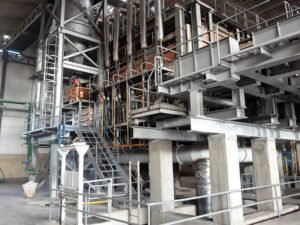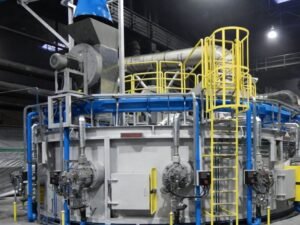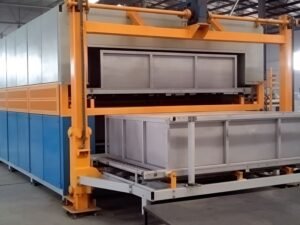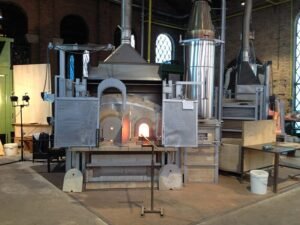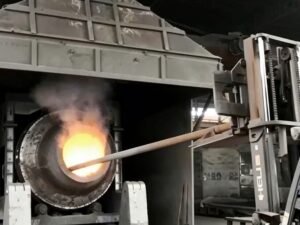
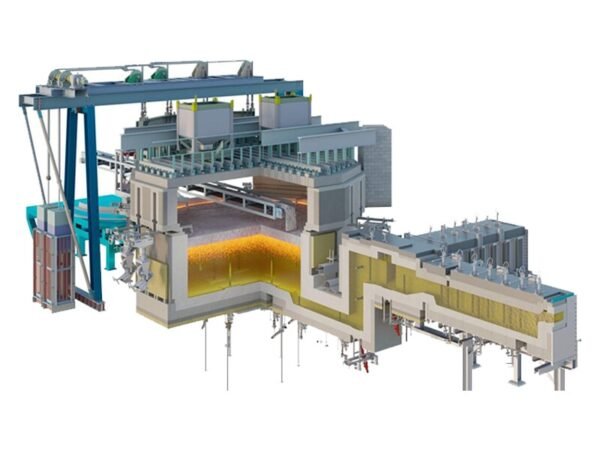
Structural Components
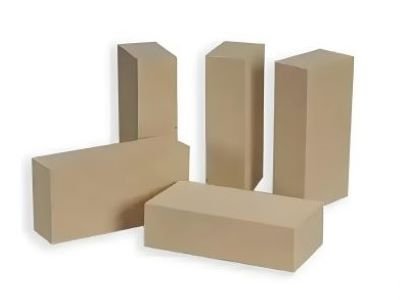
Refractory Lining: Made of specialized ceramic bricks (like fireclay) to contain the extreme heat and molten glass.
Raw Material Feed: A system introduces batch materials (silica sand, soda ash, cullet) into the furnace.
Heating System: Can be gas-fired (oxyfuel or air-fuel), electric, or hybrid, heating the glass from above.
Melting & Refining Zones: Chemical reactions and bubble removal occur as materials melt, requiring precise temperature and flow control for quality.
Output: Molten glass flows to shaping machines, while different designs (pot furnaces for small batches, tank furnaces for mass production) serve different needs.
Characteristics of Glass Melting Furnace
High Temperatures: Essential for melting and ensuring glass quality.
Refractory Materials: Withstand extreme heat and chemical corrosion.
Precision Control: Critical for uniform melts, affecting final product properties.
Continuous Operation: Large furnaces run 24/7 for industrial scale.


Applications of Glass Melting Furnace
Containers: Bottles, jars.
Flat Glass: Windows, automotive glass.
Technical Glass: Specialty products.
Tableware & Art Glass: From machine-made to artisanal.
Refractory bricks for Glass Melting Furnace
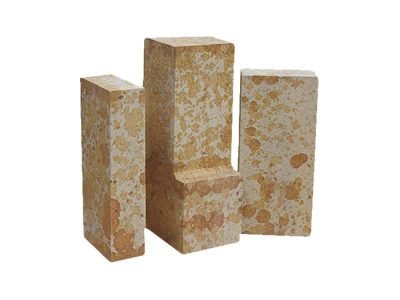
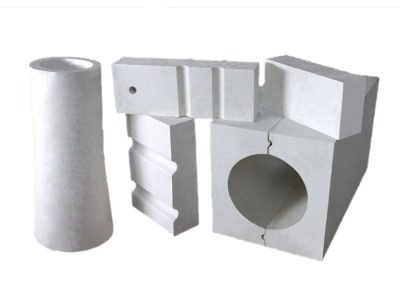
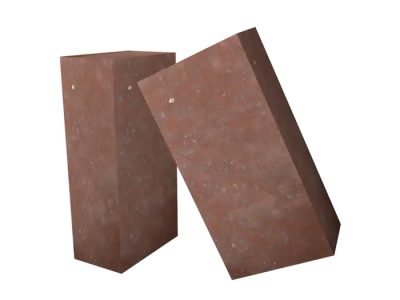
The working environment varies in different parts of a glass melting furnace, and the performance requirements for refractory bricks also differ. Below is an introduction to commonly used refractory bricks for each part:
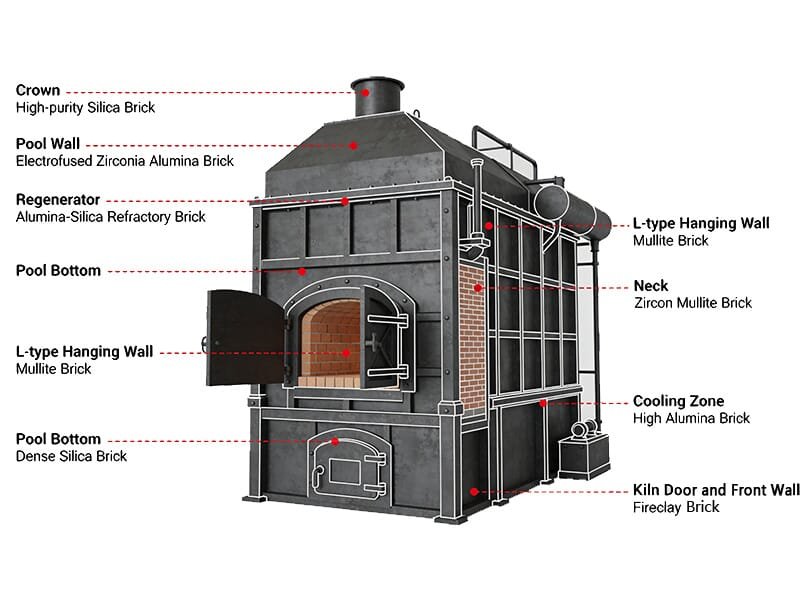
Pool Roof:The temperature at the top of the melting and cooling sections of a glass melting furnace often reaches 1600℃. It must withstand high temperatures, heavy loads, and the erosion from alkaline vapors and batch materials. High-quality, high-purity silica bricks are the first choice.
Pool Walls: In the melting and cooling sections, the parts of the pool walls in contact with the molten glass commonly use fused zirconia-corundum bricks. For the breast walls not in contact with the molten glass, corundum bricks or silica bricks can be used.
Pool Bottom: The bottom of the pool must withstand the static pressure and chemical corrosion of the high-temperature molten glass. Fused zirconia-corundum bricks and chrome-zirconia bricks are commonly used. Dense clay bricks can be used for auxiliary parts.
Regenerator Chamber: Silica bricks are generally used for the top and side walls of the regenerator chamber. High-alumina bricks and low-porosity clay bricks can be used for the middle section side walls, and low-porosity clay bricks are used for the lower section. The top of the lattice has the highest temperature, and fused magnesia bricks are generally used. The upper part, with a temperature of 1100-1400℃, can also use fused magnesia bricks. The middle part, with a temperature of 800-1100℃, is best suited for directly bonded magnesia-chrome bricks, magnesia-alumina spinel bricks, magnesia-olivine bricks, and magnesia-zirconium bricks. The lower part, with its lower operating temperature, higher load, and less alkali corrosion, generally uses low-porosity clay bricks.
L-shaped hanging walls and necks: L-shaped hanging walls and necks typically use silica bricks.
Cooling section: Corundum bricks are typically used in areas directly in contact with molten glass, while silica bricks or corundum bricks are used in areas not in contact with molten glass.
Furnace door and front wall: The furnace door and front wall need to withstand significant mechanical impact and thermal load, and high-alumina bricks or corundum bricks are commonly used.