
Selecting refractory fire bricks for specific metallurgical processes requires focusing on the core requirements of the process, combining the material characteristics of the refractory fire bricks with the operating parameters and the application scenario for precise matching. The core principle is “operating condition adaptation – material matching – performance compliance.” Specific key points are as follows:
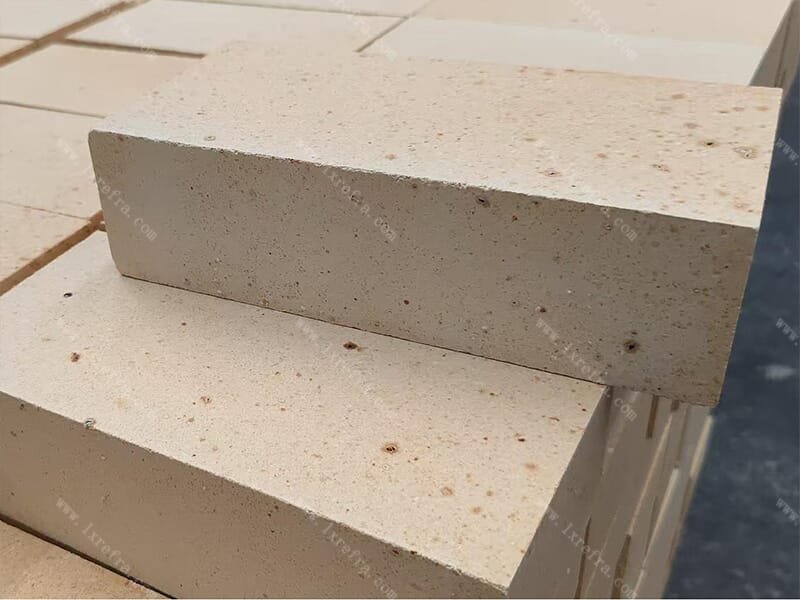
1. Define the core operating conditions of the metallurgical process
First, identify key parameters—temperature (e.g., blast furnace hearth 1500-1600℃, converter lining 1600-1800℃), corrosiveness of the medium (acidity/alkalinity of molten steel and slag), thermal shock frequency (intermittent/continuous operation), and mechanical impact strength. For example, converter blowing requires resistance to high-temperature molten steel erosion and alkaline slag corrosion, while the blast furnace hearth emphasizes resistance to molten iron penetration and high-temperature volume stability.
2. Matching refractory fire brick material systems
For acidic processes (such as silicon steel smelting), siliceous and semi-siliceous bricks can be selected, utilizing the advantage of SiO₂’s resistance to acidic media corrosion; for alkaline processes (such as converters and electric arc furnaces), magnesia, magnesia-carbon, and magnesia-chrome bricks are preferred, with outstanding resistance to alkaline slag when the MgO content is ≥85%; for neutral processes (such as stainless steel refining), high-alumina (Al₂O₃ ≥75%), corundum, or carbon composite refractory fire bricks can be selected, balancing acid and alkali corrosion resistance with high-temperature strength.
3. Focusing on key performance indicators
Key performance indicators include refractoriness (must be 100-200℃ higher than the highest process temperature), load softening temperature (suitable for high-temperature pressure environments), thermal shock stability (intermittent furnaces must withstand ≥15 water-cooled thermal shocks without cracking), room-temperature compressive strength (≥50MPa), and slag resistance (verified through dynamic slag corrosion tests). For example, refractory fire bricks used in continuous casting tundishes need to be strengthened to resist molten steel erosion and thermal shock stability.
4. Consider structural and installation requirements
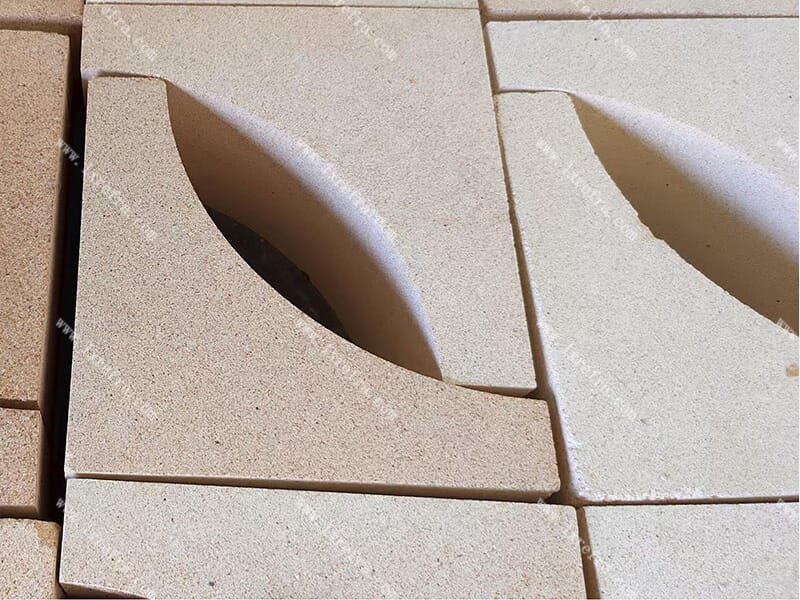
Select brick types (standard bricks, irregular-shaped bricks) according to the furnace location (furnace top, furnace wall, furnace bottom). For complex areas, use a composite construction of unshaped refractory materials and refractory fire bricks. Ensure brick dimensional accuracy (tolerance ≤ ±2mm) to prevent erosion and seepage due to gaps in the masonry joints.
5. Balance economy and service life
Avoid over-selection while meeting operational requirements (e.g., high-end corundum refractory fire bricks are unnecessary for ordinary carbon steel smelting). Prioritize products with low creep and low porosity (apparent porosity ≤ 20%) to extend service life and reduce overall costs.
Henan Ruitai Lianxin Refractory Materials Co., Ltd is a modern R&D-centered refractory manufacturer manufacturing enterprise integrated with refractories sales and marketing, furnace engineering construction, recycling and sales of waste refractories as well as refractory raw material, technology and goods import and export, and technical services. If you have any needs for refractory materials, please contact us and we will provide you with the best service.