
1. Chemical Properties
The core chemical composition of high-alumina bricks is mainly Al₂O₃, supplemented with SiO₂, and contains a small amount of impurities. The proportion of these impurities varies depending on the aluminum content grade, and the impurity content is strictly controlled to ensure fire performance.
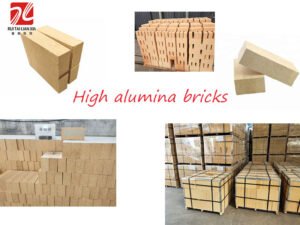
2. Physical Indicators
Fire Temperature
Determines the maximum service temperature of high-alumina bricks. Higher aluminum content results in stronger temperature resistance. Premium high-alumina bricks are suitable for high-temperature zones in blast furnaces and rotary kilns, while grade III bricks are suitable for medium-temperature conditions such as hot blast stoves and flues.
Bulk Density + Apparent Porosity
These two factors work together to reflect the brick’s density—higher bulk density and lower apparent porosity result in stronger resistance to slag erosion and high-temperature gas penetration, but slightly reduced thermal shock stability.
Room Temperature Compressive Strength
Ensures the structural strength of the bricks during construction, transportation, and room temperature conditions, preventing cracking and breakage. Blast furnace walls and kiln linings have even higher requirements for this indicator.
Load softening temperature
A core high-temperature performance indicator for high-alumina bricks, directly determining their resistance to deformation under the combined effects of high temperature and heavy load. It is a crucial indicator for heavy-duty high-temperature equipment such as blast furnaces and steelmaking furnaces.
Thermal shock resistance
Measures the brick’s tolerance to sudden temperature changes. The more cycles, the more suitable it is for conditions with frequent temperature fluctuations, such as hot blast stoves and ceramic kilns.
3. Application Scenarios
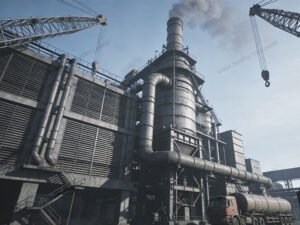
High-alumina bricks are general-purpose industrial fire materials, classified into premium, grades one to three according to Al₂O₃ content, suitable for various industries and working conditions.
Premium/Grade one is primarily used in the high-temperature zones of metallurgical blast furnaces, steelmaking converters, and cement rotary kilns, offering resistance to ultra-high temperatures, slag erosion, and heavy loads.
Grade two is suitable for building material ceramic kilns, glass melting furnace regenerators, and metallurgical flues, balancing thermal shock resistance and erosion resistance.
Grade three is an economical grade, used in medium-temperature, light-load areas. Such as flues in thermal power boilers and insulation layers in coking furnaces. In addition, low-creep, slag-resistant high-alumina bricks can also be customized to suit special high-temperature conditions. Such as non-ferrous metal smelting furnaces and kiln arches.