
The core reason for choosing refractory bricks is their high-temperature resistance, wear resistance, and corrosion resistance. They precisely meet the core protection requirements of high-temperature working conditions, making them an indispensable key protective material in industrial high-temperature fields.
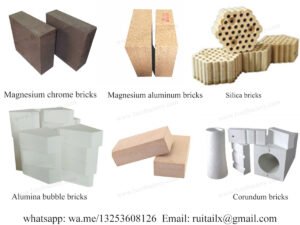
Key Reasons for Selection:
Outstanding high-temperature resistance: Capable of withstanding temperatures above 1580℃, with some special refractory bricks even able to withstand extreme temperatures above 2000℃. They can operate stably for extended periods in high-temperature environments such as kilns and boilers, without easily softening, melting, or collapsing, thus building a robust “high-temperature defense line” for equipment linings.
High mechanical strength: Maintaining excellent hardness and toughness even at high temperatures, with strong wear resistance and impact resistance. Effectively resisting high-speed erosion, particle collisions, and mechanical vibrations from high-temperature materials, significantly reducing equipment lining wear, extending the overall service life of equipment, and lowering maintenance downtime costs for enterprises.
Strong chemical stability: Effectively resisting the erosion of various corrosive media such as acids, alkalis, and neutrals, preventing chemical reactions with production materials that could lead to material deterioration or product contamination, ensuring safety in the production process and stable product quality from the source.
With excellent thermal insulation properties, refractory bricks effectively prevent the loss of high-temperature heat, reducing energy consumption in kilns, boilers, and other equipment. They also lower the temperature of the equipment casing, protecting the surrounding working environment and preventing safety hazards such as burns, achieving the dual benefits of safety and energy conservation.
Typical Application Scenarios:
Industrial kilns are a major application area for refractory bricks. Critical components such as the firing zone of cement rotary kilns, the melting pool of glass kilns, and the furnace lining of steel smelting kilns rely on the high-temperature resistance and corrosion resistance of refractory bricks to ensure continuous production.

In high-temperature equipment, the protection of critical components such as the furnace of power plant boilers, the regenerator of hot blast stoves, and the furnace bottom of heating furnaces depends on the mechanical strength and thermal insulation properties of refractory bricks.
In special scenarios with strong corrosion or high-temperature impact, such as the incineration section of waste incinerators and the lining of chemical reactors, special refractory bricks play an irreplaceable role due to their customized properties.