
The production of lightweight clay kiln bricks begins with precise raw material proportions. This material is typically a finely mixed blend of clay, clinker, and additives such as hardwood chips. Clay, as the main raw material, comprises approximately 30%–40%, providing the basic plasticity and refractoriness of the product. The addition of clinker, at 15%–25%, enhances the strength of the product. Hardwood chips, comprising a high proportion of 30%–45%, burn during firing, forming pores and thus reducing the density of the product, achieving the “lightweight” effect.
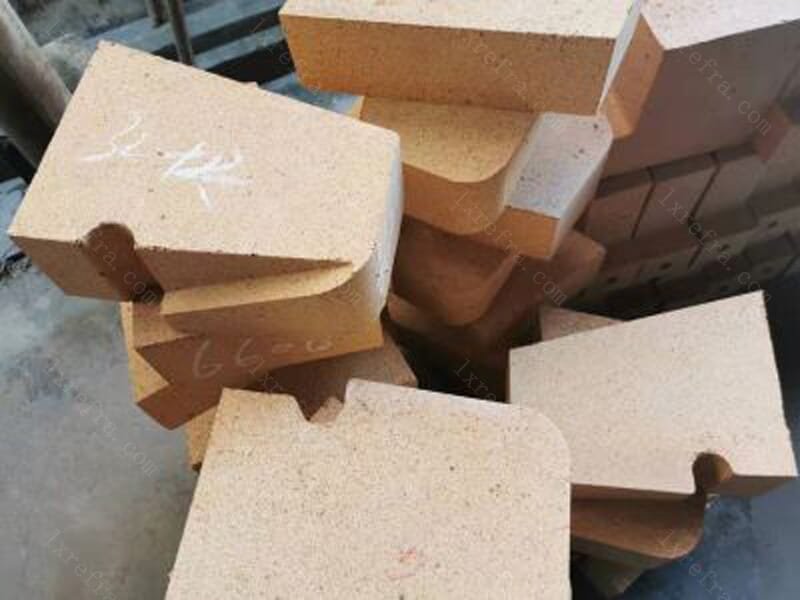
During the production process, specific additives such as syrup and sulfite pulp waste are added to improve the plasticity and stability of the clay. Subsequently, after meticulous mixing, setting, and shaping, a rigorous drying process is carried out to ensure residual moisture is below 10%, which is crucial for subsequent firing and the final quality of the product.
The firing process is crucial in the production of lightweight clay kiln bricks. It requires a high temperature of 1250–1350℃ and a holding time of 4 hours to ensure complete chemical reactions within the material and achieve the desired physical and chemical properties.
Furthermore, lightweight clay kiln bricks can also be produced by mixing them with porous or hollow materials such as fly ash perlite and diatomaceous earth. This method further reduces the material’s weight while maintaining good thermal insulation properties.
Lightweight clay kiln bricks are characterized by a bulk density between 0.4 and 1.3 g/cm³, a feature that makes them widely applicable in industrial kilns and other applications requiring thermal insulation. After firing, lightweight clay bricks may require shaping to ensure product precision and consistency.