
The core of choosing refractory bricks is matching the temperature, medium, and stress requirements of the application scenario, rather than simply pursuing high performance indicators. It requires a step-by-step selection based on three dimensions: the application environment, brick performance, and the actual application.
Step 1: Define the Core Application Scenario
Different scenarios have vastly different requirements for refractory bricks. This is the primary basis for selection.
By Temperature:
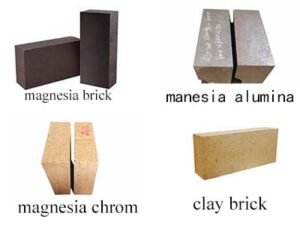
Low-temperature environments (<1200℃): Such as flues and chimneys, clay bricks can be selected.
Medium-temperature environments (1200-1500℃): Such as hot blast stoves and heating furnaces, high-alumina bricks or silica bricks can be selected.
High-temperature environments (>1500℃): Such as steelmaking converters and glass kilns, corundum bricks or magnesia bricks are required.
By Contact Medium:
Contact with acidic substances (such as siliceous slag): Siliceous bricks and clay bricks are preferred; avoid using basic bricks such as magnesia bricks.
Contact with alkaline substances (such as steel slag): Magnesia bricks, magnesia-alumina bricks, and other alkaline bricks must be selected to prevent corrosion.
For contact with molten metals (such as aluminum and copper): Corundum bricks or silicon carbide bricks with strong corrosion resistance should be selected.
Step Two: Key Performance Indicator Screening
After clarifying the application scenario, further refine the selection of suitable brick types based on core indicators.
Refractory strength: Requires a temperature 100-200℃ higher than the actual operating temperature to prevent softening and deformation under prolonged high temperatures.
Room temperature compressive strength: This is crucial when subjected to heavy loads or masonry compression. Such as the bricks at the bottom of kilns; strength must be ≥30MPa.
Thermal shock resistance: This is essential for scenarios with frequent temperature increases and decreases (such as intermittent kilns). Typically, it should withstand more than 10 thermal shock tests without cracking.
Bulk density and porosity: High-density, low-porosity bricks offer stronger corrosion resistance but also higher thermal conductivity. A comprehensive assessment is needed based on whether insulation is required.
Step Three: Considering Practical Application Details
Finally, practical issues during installation and use must be considered to avoid selection errors.
Dimensional Accuracy: For large kilns, bricks with small dimensional tolerances (e.g., ±1mm) should be selected to reduce gaps in the masonry and prevent fire leakage.
Masonry Method: Special locations (such as corners and furnace doors) may require irregularly shaped bricks, which need to be custom-made in advance to avoid on-site cutting affecting performance.
Cost Balance: Prioritize brick types with high cost-effectiveness while meeting usage requirements. For example, in medium-temperature environments, high-alumina bricks perform better than clay bricks. But are also more expensive. If temperature fluctuations are small, clay bricks are sufficient.