
Glass kilns face high temperatures, strong corrosion, and more complex operating conditions during the production process. To ensure the efficient and safe operation of glass furnaces, the selection and use of suitable refractory materials has become a key issue. The special working environment of glass furnaces requires fire bricks to not only have good high-temperature performance, but also excellent erosion resistance.
1. Performance requirements for fire bricks in glass kilns
The working environment of a glass furnace is an extremely harsh system, involving high temperatures, strong corrosion, and complex chemical reactions. Therefore, several factors need to be considered when selecting refractory bricks.
(1) High temperature performance
The working temperature inside a glass furnace often exceeds 1500℃, and can even reach over 2000℃. Therefore, refractory bricks must have a high melting point and thermal shock resistance to avoid cracking or deformation caused by drastic temperature fluctuations.

(2) Resistance to erosion
Glass furnaces not only contain high temperatures, but also molten glass, strong acid gases, and metal vapors that corrode refractory materials. This is especially true in areas where molten glass comes into direct contact with the bricks. Here, the refractory fire bricks need to have excellent resistance to chemical corrosion to prevent damage from long-term erosion.
(3) Thermal stability and low coefficient of thermal expansion
Refractory bricks are prone to thermal expansion at high temperatures. So refractory materials with low expansion coefficients must be selected to avoid cracking of the bricks when temperature changes occur.
In addition, refractory bricks must maintain a stable physical structure during long-term high-temperature use.
(4) Mechanical strength and wear resistance
Due to the potential for physical impacts and abrasions in glass melting furnaces, the mechanical strength and wear resistance of refractory bricks are also crucial performance requirements. Especially for the furnace walls and bottom.
In order to cope with the high temperature, high corrosion and complex working environment of glass furnaces, it is particularly important to select the right refractory bricks.
High-alumina bricks, magnesia-alumina bricks, and silicon carbide bricks are commonly used refractory brick materials, each with its own advantages. Their different properties make them suitable for different types of glass furnaces.
2. Material selection for fire bricks in glass kilns
The choice of refractory brick materials for glass kilns directly affects the kiln’s service life and production efficiency. In this process, the working environment of the glass furnace, the performance characteristics of the refractory bricks, and cost-effectiveness must be comprehensively considered.
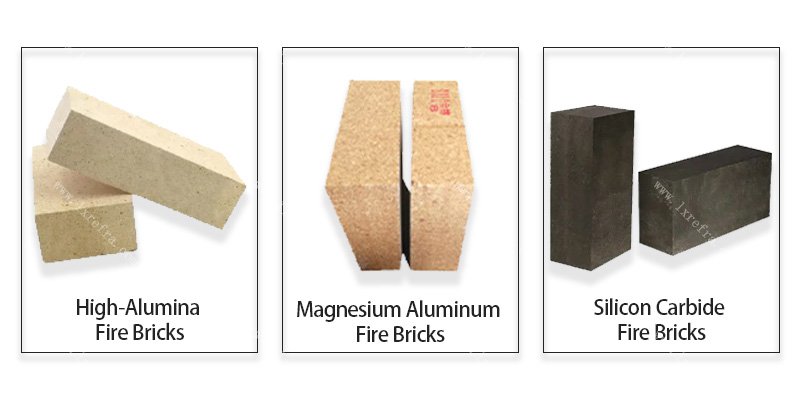
(1) High-alumina fire bricks
The main component of high-alumina bricks is bauxite, which has high refractoriness (usually above 1600℃). Furthermore, they exhibit strong resistance to corrosion from molten glass.
High-alumina bricks perform well in the upper part and furnace walls of glass furnaces, effectively resisting high temperatures and chemical corrosion.
(2) Magnesia-alumina refractory bricks
Magnesia-alumina refractory bricks are made of high-purity magnesia and bauxite materials, and have stronger resistance to high temperature, acid corrosion and thermal shock.
This type of refractory brick is suitable for high-temperature molten glass zones. It is particularly effective in highly corrosive areas within glass kilns, significantly reducing the frequency of kiln maintenance and replacement.
(3) Silicon carbide fire bricks
Silicon carbide bricks possess excellent thermal shock resistance and abrasion resistance, making them suitable for the unique working conditions within glass furnaces. For example, they are ideal for areas with high-speed flow of molten glass or areas experiencing severe wear.
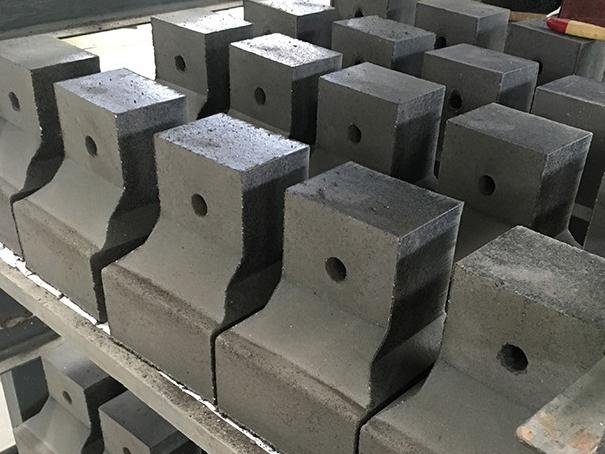
Furthermore, silicon carbide bricks exhibit strong corrosion resistance, particularly against the erosion of molten glass and acidic gases.
Different types of refractory bricks have different performance characteristics. They should be precisely matched according to the specific working environment and technical requirements of the glass furnace.
By rationally combining different refractory brick materials, the usage needs of the glass kiln can be better met.
3. Installation and Maintenance of Refractory Bricks
Proper installation and reasonable maintenance are also key factors in extending the service life of glass furnaces. Improper installation or lack of regular maintenance can lead to premature damage to refractory bricks.
(1) Installation Requirements for fire Bricks
The installation of refractory bricks must be carried out strictly in accordance with the design specifications. Ensure proper alignment and precise cutting of the brick joints to avoid thermal stress concentration and airflow interference.
During installation, attention should be paid to the connection method between refractory bricks to ensure tight joints and prevent cracks or gaps, thereby reducing heat loss.
(2) Maintenance of Refractory Bricks
During long-term use, the refractory bricks in the glass kiln will suffer varying degrees of damage due to high temperatures, chemical erosion, and physical wear.
Therefore, regularly inspecting refractory bricks and identifying problems is an important step in ensuring the normal operation of glass kilns.
(3) Application of Anti-Erosion Coatings
To improve the corrosion resistance of refractory bricks, anti-erosion coating technology can be used. Applying a highly corrosion-resistant coating to the surface of refractory bricks can effectively improve their resistance to molten glass and acidic gases.
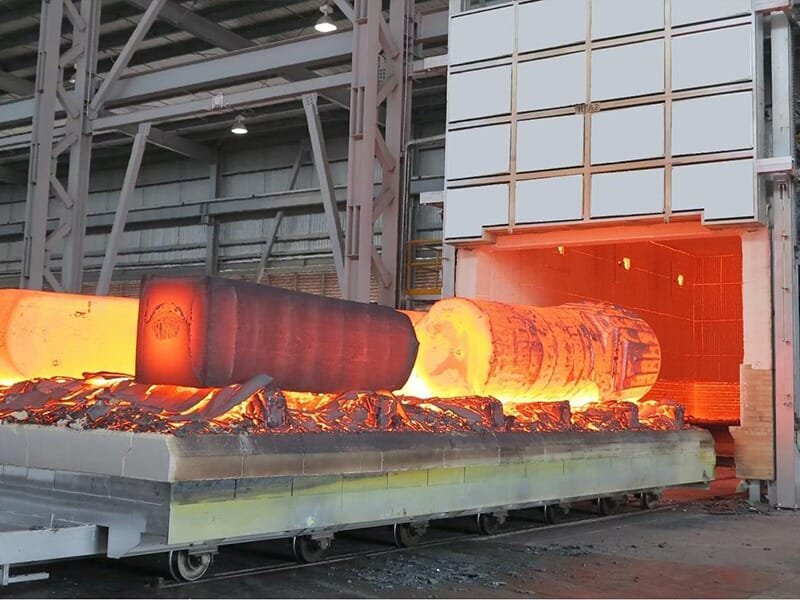
Through scientific and reasonable installation and maintenance measures, the efficiency of refractory bricks can be significantly improved.
4. Conclusion
By selecting suitable materials, such as high-alumina bricks, magnesia-alumina bricks, and silicon carbide bricks, the working efficiency and durability of glass kilns can be effectively improved.
Meanwhile, through precise installation and other measures, the service life of refractory bricks can be further extended. This ensures the glass furnace operates continuously and stably under high load conditions.
A suitable refractory brick supplier is also an indispensable step. Henan Ruitai Lianxin Refractory Materials Co., Ltd. has 20 years of experience in refractory material production. It not only provides customers with high-quality refractory bricks that meet quality standards, but also offers solutions tailored to the specific kiln conditions.
If you have any needs, please feel free to contact us. Choosing Ruitai Lianxin means choosing strength.