
The material of a fire brick determines its core performance, and different materials are suited to different operating conditions. Choosing the right material ensures stable kiln operation.
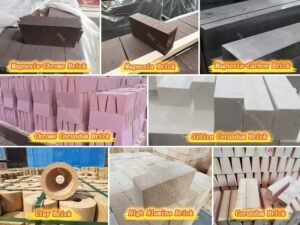
Henan Ruitai Lianxin Refractory Materials Co., Ltd. specializes in high-alumina bricks, magnesia-carbon bricks, silicon carbide bricks, and other materials, precisely matching the production needs of industries such as steel, cement, and glass.
Alumina Refractory Bricks
1.1 Core Characteristics
Alumina fire bricks are mainly composed of alumina and are classified into clay bricks (30%-48%) and high-alumina bricks according to Al₂O₃ content.
They exhibit stable high-temperature resistance, strong thermal shock resistance, and are not prone to cracking due to sudden temperature changes. They also possess high mechanical strength, excellent wear resistance, and outstanding price-performance ratio.
1.2 Suitable Applications
Clay bricks are suitable for kiln flues and low-temperature preheating zones; Grade I high-alumina bricks are suitable for electric furnace roofs and cement kiln cooling zones.
Magnesia Refractory Bricks
2.1 Core Characteristics
Mathematical refractory bricks are mainly composed of magnesium oxide, including magnesia-carbon bricks and magnesia-alumina spinel bricks. They exhibit extremely strong resistance to alkaline slag erosion and outstanding high-temperature performance, capable of withstanding temperatures above 1600℃.
Low-carbon magnesia-carbon bricks also possess good oxidation resistance, resulting in a longer service life.
2.2 Suitable Applications
Mathematica-carbon bricks are used for converter furnace walls and ladle slag lines. Magnesia-alumina spinel bricks are suitable for the calcination zone of cement rotary kilns; ordinary magnesia bricks can be used as permanent protective bricks for kilns.
Silicon Carbide Refractory Bricks
1.1 Core Characteristics
Silicon carbide refractory bricks use silicon carbide as the main raw material, exhibiting good thermal conductivity and a low coefficient of thermal expansion. They possess extremely strong wear and erosion resistance, able to withstand the dual erosion of high-temperature gas flow and molten slag, and exhibit high chemical stability.
1.2 Suitable Applications
Suitable for high-wear and high-erosion conditions such as lime kiln calcination zones, waste incinerator linings, and steel plant tapping trenches.
Other Specialty Refractory Bricks
1.1 Corundum Mullite Bricks
A composite material of alumina and mullite exhibits excellent high-temperature resistance and thermal shock resistance. It is suitable for high-temperature and complex applications such as glass furnace burners and chemical reactors.
1.2 Acid-Resistant Bricks
Mainly composed of siliceous raw materials, with strong resistance to acidic media erosion. Suitable for chemical kiln flues and acidic wastewater treatment equipment linings.
Henan Ruitai Lianxin specializes in refractory materials and can provide a full range of products including high-alumina bricks, magnesia-carbon bricks, silicon carbide bricks, and corundum mullite bricks. Customized specifications and performance parameters are available upon request, along with professional selection guidance.
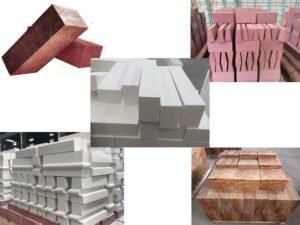
If you have purchasing needs for different types of refractory bricks, require characteristic consultation, or have questions about application scenarios, please contact us!
Our professional team provides one-on-one service, offering highly adaptable and durable refractory brick solutions to help ensure efficient production operations.